News & Annoucements
Home | News & Annoucements

Customer Success Story: Al Sharq Hospital Digitises 60 Clinical Forms as PMDs on Cerner ISH MED
Overview
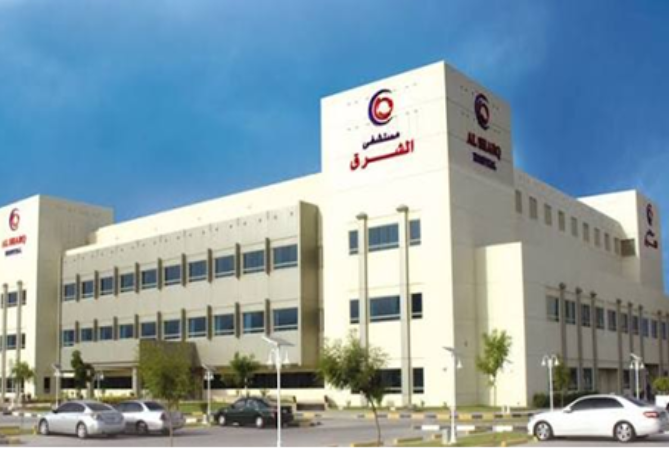
Al Sharq Hospital in Fujairah, UAE runs its clinical operations on SAP with Cerner ISH MED. While the core system was live, a large body of clinical documentation was still being completed on paper — assessments, flow sheets, checklists and procedure records spread across every specialty in the hospital. DigiMed Technologies was engaged to bring that documentation into the electronic record as Parameterised Medical Documents (PMDs), together with the printable forms clinicians and medical records need alongside them.
The Challenge:
The Solution:
Benefits Achieved:
Conclusion:
Al Sharq Hospital now captures its clinical documentation electronically across the hospital, in the same system its clinicians already use. The paper inventory has been rationalised rather than simply copied, specialist forms kept their clinical meaning, and every document carries a printable form for the occasions that still require one.
Al Sharq Hospital in Fujairah, UAE runs its clinical operations on SAP with Cerner ISH MED. While the core system was live, a large body of clinical documentation was still being completed on paper — assessments, flow sheets, checklists and procedure records spread across every specialty in the hospital. DigiMed Technologies was engaged to bring that documentation into the electronic record as Parameterised Medical Documents (PMDs), together with the printable forms clinicians and medical records need alongside them.
The Challenge:
- Clinical documentation still on paper: Assessments, flow sheets and procedure records were completed by hand across more than twenty specialties, leaving the electronic record incomplete for clinicians and for audit.
- A sprawling, duplicated form inventory: Over a hundred distinct manual forms were in circulation, with overlapping content and no single view of which were genuinely required.
- Documentation that resists simple digitisation: A significant proportion were not plain question-and-answer forms. Dental procedure marking sheets, coronary artery maps and urology assessments depend on marking an anatomical diagram; growth charts, neonatal jaundice thresholds and early warning scores depend on plotting values over time.
- Data captured twice: Vital signs and diagnostic results already held in Cerner were being re-written onto paper forms rather than carried into them.
- Print still required: Digitising the capture was not sufficient on its own — signed, printable output remained a clinical and medico-legal requirement.
The Solution:
- Rationalise before building: The full manual form inventory was reviewed form by form with the clinical teams. Duplicates and superseded forms were dropped and those already available online were excluded, reducing an inventory of over one hundred manual forms to a definitive scope of 65 PMDs — so the hospital digitised what it needed rather than what it happened to have.
- Build into the existing ISH MED solution: All 65 PMDs were developed inside the hospital’s existing Cerner ISH MED implementation, with a documented prerequisite checked for each one so that documents draw on components already configured in the system.
- Annotated anatomical documents: Twenty of the documents required annotation. Each diagram was divided into marked sections, with every section exposed as a field for findings and treatment plan — covering adult and paediatric dental procedure marking, coronary artery mapping, urology and similar assessments.
- Printable form for every PMD: A matching printable form was developed alongside each PMD, preserving the layout clinicians and medical records expect.
- Phased monthly delivery: Delivery was structured into seven monthly tranches of eight to ten documents, allowing clinical teams to review, test and adopt each specialty group without a single large change landing across the hospital at once.
Benefits Achieved:
- A complete electronic record: Clinical assessment, monitoring and procedure documentation now sits in the EMR rather than in paper files, and is available wherever the record is.
- Broad specialty coverage: More than twenty specialties are covered —anaesthesia, cath lab, ICU, NICU and nursery, internal medicine, paediatrics, obstetrics, surgery, dental, dermatology, ENT, gastroenterology, nephrology, neurology, ophthalmology, orthopaedics, pulmonology, urology, physiotherapy, nutrition and emergency response.
- Specialist documentation without compromise: Annotated documents were delivered as such, so the hospital did not have to flatten clinically meaningful forms into generic questionnaires to get them into the system.
- Less duplicate entry: Vitals and results already in Cerner flow into the documents that need them, reducing transcription and the errors that come with it.
- A leaner form inventory: Duplicated and obsolete forms were retired during the exercise, leaving a smaller, governed set.
Conclusion:
Al Sharq Hospital now captures its clinical documentation electronically across the hospital, in the same system its clinicians already use. The paper inventory has been rationalised rather than simply copied, specialist forms kept their clinical meaning, and every document carries a printable form for the occasions that still require one.


Useful Links
Our Solution
Contact Us
-
 +971 4570 8895
-
 Sales@dmtech.me
-
 B-18, Business Center, Sharjah Media City (Shams),
Al Messaned, Al Bataeh, Sharjah,
United Arab Emirates, PO Box 51500.
B-18, Business Center, Sharjah Media City (Shams),
Al Messaned, Al Bataeh, Sharjah,
United Arab Emirates, PO Box 51500.