News & Annoucements
Home | News & Annoucements

Customer Success Story: Makassed General Hospital Goes Live with a Mobile-First Clinical EMR Integrated with SAP
Overview
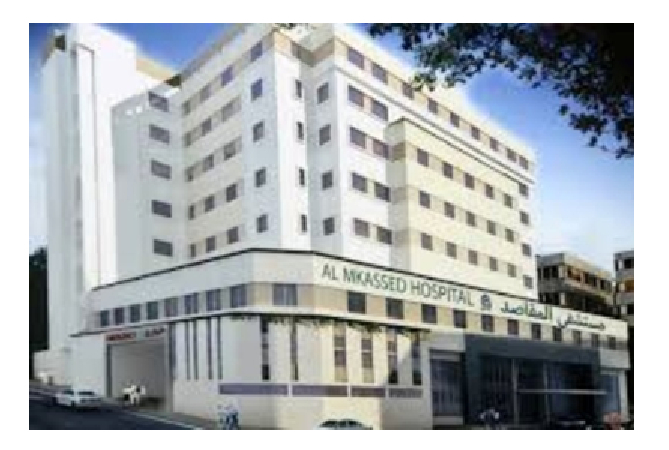
Makassed General Hospital in Beirut is one of Lebanon’s established general hospitals, serving a broad inpatient, outpatient and emergency population across a full range of specialties. Building on the foundation laid in Phase 1, the hospital set out to complete its clinical estate — bringing the whole of the care process into one electronic record rather than a partially digitised one. DigiMed Technologies after successfully delivering phase – 1, delivered Phase 2 of the Kube clinical EMR: a single clinical data repository, documentation and ordering for every discipline, closed-loop medication administration, Inpatient, outpatient, eMAR, CPOE and dedicated workflows for emergency and surgery and integrated with the hospital’s SAP environment.
The Challenge:
The Solution:
Benefits Achieved:
Conclusion:
Makassed General Hospital runs its clinical care on a single mobile-accessible electronic record spanning the ward, the emergency department, theatre, critical care and oncology — integrated with SAP so that clinical and administrative processes work from the same information. The hospital has moved from a partially digitised clinical process to a complete one, on a platform built to extend further.
Makassed General Hospital in Beirut is one of Lebanon’s established general hospitals, serving a broad inpatient, outpatient and emergency population across a full range of specialties. Building on the foundation laid in Phase 1, the hospital set out to complete its clinical estate — bringing the whole of the care process into one electronic record rather than a partially digitised one. DigiMed Technologies after successfully delivering phase – 1, delivered Phase 2 of the Kube clinical EMR: a single clinical data repository, documentation and ordering for every discipline, closed-loop medication administration, Inpatient, outpatient, eMAR, CPOE and dedicated workflows for emergency and surgery and integrated with the hospital’s SAP environment.
The Challenge:
- A clinical record spread across places: Demographics, problems, allergies, notes and results did not come together in one view, so clinicians assembled the picture manually from several sources before making a decision.
- Ordering without a single electronic route: Orders for medications, investigations, consultations and support services followed different paths, with no common record of what had been requested, by whom, or where it had reached.
- Medication administration without verification: There was no systematic electronic check that the right patient received the right medication at the point of administration.
- Specialty areas working apart: Emergency, surgery, critical care including neonatal, and oncology each have distinct workflows, and meeting them had historically meant departmental workarounds rather than one system that accommodates all of them.
- Clinical and administrative data separated: Patient administration and financial processes sat in SAP while clinical activity sat elsewhere, with no dependable flow between them.
The Solution:
- A single clinical data repository: One underlying record providing the patient context banner, clinical overview, chart review, diagnoses and problems, allergies, notes and results — so every clinician works from the same picture.
- Role-based clinical dashboards: Relevant information is aggregated from the record, from connected devices and from other data services into a single configurable view, allowing rapid review and timely decisions at the point of care.
- Clinical documentation for every discipline: Both free-text progress notes and structured documentation, covering physician, nursing and allied health requirements within one documentation framework.
- Electronic ordering with medication management: Clinicians place orders electronically across every category — medications, treatments and investigations such as laboratory, radiology and cardiology, as well as consultations, nursing and allied health requests and patient support services.
- Closed-loop medication administration: An electronic medication administration record accessible from cart-based and mobile devices, with positive patient identification and barcode verification at the bedside so that administration is checked as it happens.
- Specialty workflows within the same record: Emergency triage and tracking from pre-registration through to disposition with access to prior emergency history; surgical workflow spanning resource management, surgeon preference cards and links to supply and charging; documentation and ordering on a single screen; and oncology chemotherapy with protocol and complex medication management.
- Pharmacy across both settings: Inpatient pharmacy with drug-allergy, drug-drug, drug-food interaction and therapeutic duplication checking, together with outpatient pharmacy covering prescription management and retail point of sale.
- Standards-based integration with SAP: A platform-independent integration layer exchanges demographic, clinical result and financial data between the EMR and SAP over so patient administration, clinical activity and revenue processes stay aligned without manual reconciliation.
Benefits Achieved:
- One record, one version of the patient: Clinicians see problems, allergies, notes, orders and results together rather than reconstructing them across systems before a decision.
- Safer medication practice: Interaction and duplication checking at the point of prescribing, and positive patient identification at the point of administration, put verification into the workflow rather than alongside it.
- Documentation at the point of care: Mobile access means notes, observations and orders are recorded while the clinician is with the patient, improving both timeliness and accuracy.
- Specialty needs met without separate systems: Emergency, surgery, critical care, neonatal and oncology run their own workflows inside the same record, avoiding the departmental islands that fragment a patient history.
- Clinical and financial data in step: Integration with SAP keeps patient administration, clinical activity and billing aligned, removing a standing source of manual reconciliation.
- Coordinated, plan-driven care: Multidisciplinary care plans and pathways give the whole team a shared view of goals, interventions and expected outcomes.
Conclusion:
Makassed General Hospital runs its clinical care on a single mobile-accessible electronic record spanning the ward, the emergency department, theatre, critical care and oncology — integrated with SAP so that clinical and administrative processes work from the same information. The hospital has moved from a partially digitised clinical process to a complete one, on a platform built to extend further.


Useful Links
Our Solution
Contact Us
-
 +971 4570 8895
-
 Sales@dmtech.me
-
 B-18, Business Center, Sharjah Media City (Shams),
Al Messaned, Al Bataeh, Sharjah,
United Arab Emirates, PO Box 51500.
B-18, Business Center, Sharjah Media City (Shams),
Al Messaned, Al Bataeh, Sharjah,
United Arab Emirates, PO Box 51500.